

 Company Profile
 Social Responsibility
 Get A Quote
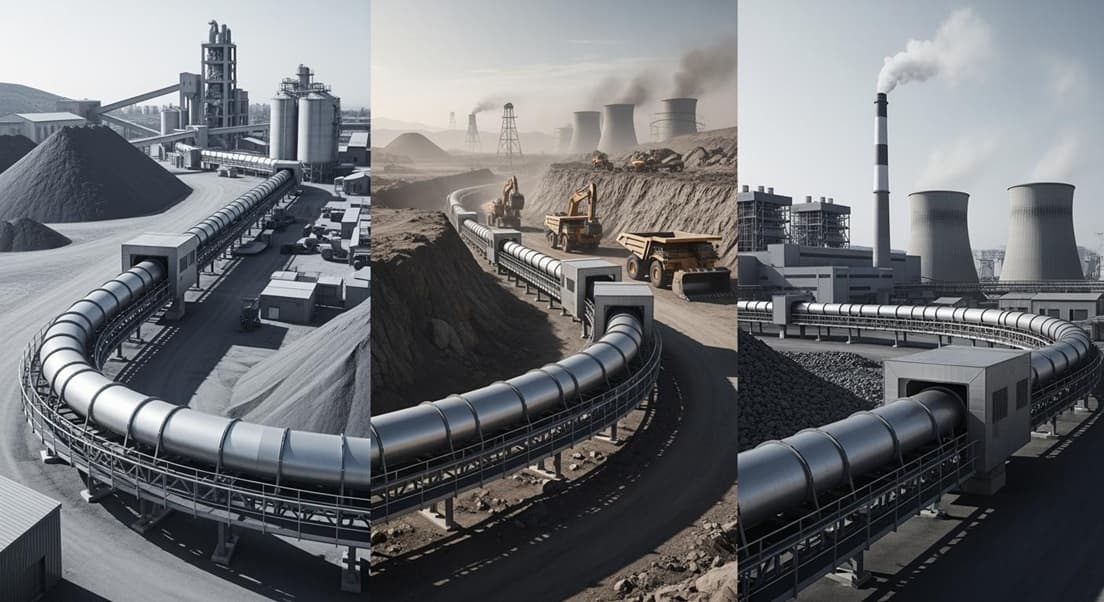
Tube belt conveyors are very important in cement, mining, and power plants. They carry materials easily over long paths and tricky routes. Workers use them for big loads like coal, limestone, and clinker. These systems control dust and spills better than open conveyors.
-
Tube belt conveyors help keep the air cleaner by lowering emissions.
-
They make work safer in busy factories.
Tube Belt Conveyors Overview
Design and Features
Long distance curved tube belt conveyors are different because they have a closed shape. The tube wraps around the materials to keep them safe. This stops things from falling out or getting dirty. The table below shows how tube belt conveyors and regular belt conveyors are not the same:
|
Feature |
Tubular Belt Conveyors |
Conventional Belt Conveyors |
|---|---|---|
|
Design |
Encloses materials in a tube-like shape |
Open belt configuration |
|
Spillage Prevention |
Yes, prevents spillage and contamination |
No, materials are exposed |
|
Routing Options |
Complex routing and steep incline capabilities |
Limited routing options |
|
Durability |
Higher due to enclosed design |
Varies, generally lower |
|
Efficiency |
Enhanced operational efficiency |
Standard efficiency |
The closed tube helps stop spills and keeps the area clean. This also means less waste is made. The tube keeps rain and dust away from the materials. People in cement, mining, and power plants like these conveyors. They work well for hard paths and steep hills.
Note: The round, closed shape of tube belt conveyors helps stop dust from escaping. This makes the area safer and cleaner for workers.
How They Work
Tube belt conveyors move stuff inside a closed tube. A chain with disks pushes the material forward inside the tube. This makes less rubbing and less damage to soft items. The closed belt keeps things safe from weather and stops loss during moving.
These conveyors keep materials safe over long trips. They do this in a few ways:
-
The closed tube stops outside dirt from getting in.
-
Soft movement keeps things from breaking.
-
Fewer parts touch the material, so there is less harm.
Enclosed pipe conveyor belt systems move things gently to keep them safe. The closed tube keeps out dust and dirt, which is important where health rules are strict. This system is good for many jobs because it keeps things safe and makes less mess.
Industry Uses of Tube Belt Conveyors
Cement Plant Applications
Cement plants use tube belt conveyors to move cement, clinker, limestone, and other fuels. These systems carry wet materials and stop spills while moving. The tube shape keeps materials safe from wind, rain, and dirt. Workers use tube belt conveyors for steep hills and sharp turns in busy plants. These conveyors can move many kinds of materials, so they help with lots of jobs.
-
Tube belt conveyors move cement, clinker, limestone, gravel, and ores.
-
The system can move up to 6,000 tons each hour.
-
One belt can be as long as 7 kilometers.
-
The design lets belts go up or down at 30 degrees.
The table below shows how tube belt conveyors work better than old systems:
|
Criteria |
Tube Belt Conveyors (Pipe Conveyor Belt Systems) |
Traditional Conveyors |
|---|---|---|
|
Design |
Enclosed tubular; adapts to curves and elevation changes |
Open, flat belt; best for straight lines |
|
Material Spillage |
Zero spillage |
Higher risk, especially with sticky material |
|
Dust Control |
Excellent; prevents dust escape |
Needs extra dust suppression |
|
Environmental Impact |
Lower; prevents leakage, reduces carbon footprint |
Higher; more cleaning needed |
|
Maintenance |
Slightly higher; specialized parts |
Easier, less frequent |
|
Cost |
Higher initial; lower long-term |
Lower upfront; higher long-term |
|
Regulatory Compliance |
Ideal for sensitive areas |
Less suitable for strict zones |
Mining and Quarrying
Mining and quarrying sites use heavy duty tube belt conveyors for mining to move big loads. These conveyors carry ores, coal, sand, gravel, iron ore, quartz, lignite, and anthracite. The closed tube keeps dust and spills inside, which helps keep workers safe and protects nature. Tube belt conveyors can go far and handle steep paths, so they work well in tricky mines.
Workers use many ways to stop dust and spills:
-
Water sprays and fogging stick tiny bits together.
-
Covers and enclosures keep dust inside.
-
Skirting and seals make tight barriers.
-
Special chutes guide the flow of materials.
-
Barriers and curtains slow down air.
-
Dust collectors grab dust from the air.
-
Belt wipes clean off small bits.
-
Loading zones keep materials in place.
-
Belt tracking stops belts from going off track.
-
Slider beds and close rollers seal gaps.
-
Carryback control stops dropped stuff.
-
Regular checks fix problems before they get worse.
Tube belt conveyors help move materials safely and quickly in mining and quarrying. The system helps workers follow tough rules for the environment.
Power Plant Fuel Handling
Power plants use tube belt conveyors to move fuel safely. These systems bring coal and biomass to boilers on time. The closed tube stops dust from spreading and lowers fire risks. Workers see fewer dust problems after using tube belt conveyors. Good care of these systems makes them work better and stops costly breakdowns. Even a small boost in working time saves a lot of money.
-
Tube belt conveyors make fuel delivery more reliable.
-
The system makes plants safer by lowering fire risks.
-
Power plants in Asia had 20% fewer dust problems after using tube belt conveyors.
Tube belt conveyors are important for moving big loads in power plants. The system moves many types of fuel and helps keep workers safe.
Environmental and Safety Benefits
Tube belt conveyors protect the environment and make work safer. The closed tube stops dust and gas from escaping, which keeps the air clean and helps nature. The system stops spills and follows OSHA and EPA rules. Workers avoid fines and have safer jobs.
The table below shows safety features and their benefits:
|
Safety Feature |
Benefit to Workplace Safety |
|---|---|
|
Enclosed design |
Minimizes exposure to hazardous materials |
|
Reduced dust emissions |
Decreases respiratory hazards for workers |
|
Limited access points to moving parts |
Reduces risk of injuries from machinery operation |
-
The closed tube stops spills.
-
Tube belt conveyors keep the environment safe from pollution.
-
The system can go up steep hills and around tight corners, which helps work go faster.
Tube belt conveyors help move materials safely and cleanly in cement, mining, and power plants. The system helps workers follow rules and stay safe.
Tube Belt Conveyors vs. Pipe Conveyors
Key Differences
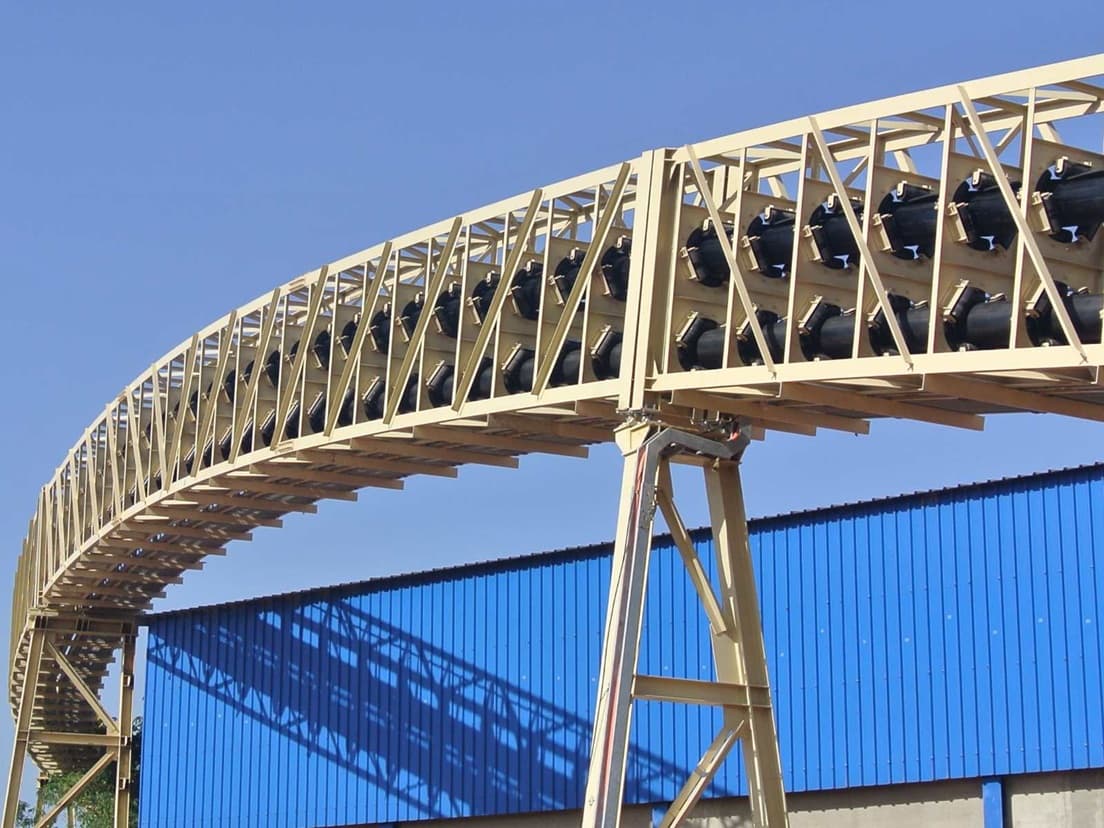
Tube belt conveyors and pipe conveyors move materials in big factories. They look almost the same, but they work differently. Tube belt conveyors use a belt that wraps into a tube around stuff. Pipe conveyors use a belt that folds into a round shape and goes inside a pipe. Both systems keep materials safe from rain and dirt.
The table below shows how tube belt conveyors and pipe conveyors are different:
|
Feature |
Tube Belt Conveyors |
Pipe Conveyors |
|---|---|---|
|
Belt Shape |
Forms a tube around material |
Folds into a circular pipe shape |
|
Routing Flexibility |
Handles complex layouts |
Handles complex terrain and tight spaces |
|
Material Protection |
Keeps materials clean and dry |
Prevents exposure and leakage |
|
Incline Capability |
Up to 30 degrees |
Up to 30 degrees |
|
Two-Way Transport |
Not typical |
Allows two-way movement |
|
Space Efficiency |
Compact design |
Needs less space and structure |
Advantages of Tube Belt Conveyors
Tube belt conveyors have many good points for cement, mining, and power plants. They work well in busy places and twisty plant layouts. The system can go around machines and needs fewer changes. Tube belt conveyors save space and move things gently. They help keep breakable items safe and make products better. The system can have many inlets and outlets, so it is easy to control where things go. Tube belt conveyors also work with machines, so plants need fewer workers.
Tip: Tube belt conveyors help plants follow tough rules by keeping dust and spills inside the tube.
The table below shows features and benefits for tricky plant layouts:
|
Feature |
Benefit |
|---|---|
|
Flexible Routing for Complex Plant Layouts |
Can bypass existing machines, reducing structural changes and minimizing dust and material loss. |
|
Compact and Space-Saving System Design |
Maximizes floor space utilization, ideal for crowded production workshops. |
|
Continuous and Gentle Material Handling |
Reduces material degradation, improving product quality for fragile materials. |
|
Multi-Outlet and Multi-Inlet Layouts |
Simplifies system design, allowing for centralized control of material distribution. |
|
Easy Integration with Automation |
Supports fully automatic material handling, improving accuracy and reducing labor. |
When to Choose Pipe Conveyors
Pipe conveyors are best for some jobs. They work well in places with tricky ground and small spaces. Pipe conveyors keep materials safe from rain, wind, and dust. They stop leaks and help keep the area clean. Pipe conveyors can move things up steep hills, up to 30 degrees. This is better than many other conveyor types. Pipe conveyors can move things both ways, which helps work go faster. The round shape saves space and needs fewer extra parts.
Plants should pick pipe conveyors when they need:
-
Flexible layout planning for tight spaces and tricky ground
-
Protection from rain, wind, and leaks
-
Steep incline transport up to 30 degrees
-
Two-way movement for faster work
-
Less space and fewer extra parts
Pipe conveyors help with protecting nature. They keep materials safe from weather and stop dirt from getting in. Pipe conveyors can turn in small spaces and need fewer transfer stations. This can save money and make the system easier to use.
Selection Guide
Material Considerations
Picking the right tube belt conveyor starts with knowing the material. Engineers check how big and what shape the particles are. They look at how heavy each piece is and how packed together the material is. They also think about how wet the material is and if it can handle heat. Some materials are rough or have sharp edges, which can wear down the conveyor. Chemicals in the material can change how the system works. Engineers use daily amounts and drop tests to help choose the best design.
-
Particle size and shape
-
Weight and density
-
Moisture content
-
Temperature sensitivity
-
Abrasiveness and angularity
-
Chemical properties
|
Concern |
Description |
|---|---|
|
Wear and tear |
Rough materials can make the conveyor wear out faster. This means more fixing is needed. |
|
Handling cohesive materials |
Sticky materials can block the conveyor or make it move slowly. |
Distance and Layout
The way the plant is set up changes the conveyor system. Engineers use maps of the plant to help plan. Small spaces and tricky paths change the design. Sometimes, the conveyor needs to go up and down or side to side. Tube conveyor systems work well in places with low ceilings or long paths. Good planning helps the conveyor go around things in the way.
-
Accurate data collection and mapping
-
Environmental constraints like cleanroom zones
-
Space limitations and efficient routing
-
Vertical and horizontal transport needs
-
Solutions for low ceilings and long distances
-
Planning for obstacles
Environmental Factors
The environment can change how the conveyor works. Very hot or cold weather can wear out parts or make materials break. Wet air and water can make parts weak and rusty. Sunlight can break down rubber and make things crack. Chemicals can hurt parts and cost a lot to fix.
|
Environmental Factor |
Impact on Conveyor Performance and Longevity |
|---|---|
|
Weather Conditions |
Very hot or cold weather can crack and dry out parts. Cold can make things break and cause ice. |
|
Humidity and Moisture |
Water can make parts weak and rusty, so they break sooner. |
|
Sunlight Exposure |
Sunlight can break down rubber and make it wear out faster. Heat can make things crack. |
|
Corrosive Materials |
Chemicals can damage parts and cost a lot to fix if not watched. |
Tip: Checking the conveyor often and using covers helps it last longer in tough places.
Cost and Maintenance
How much the conveyor costs and how often it needs fixing is important. Regular care keeps the conveyor working and lowers repair bills. Well-cared-for conveyors work well more than 90% of the time. Each year, fixing costs about 2% of the price plus 5% of the belt cost. The total cost depends on the first price, how much it costs to run, and fixing costs. Using drive systems in different spots can save energy and money in big setups.
Note: Taking good care of the conveyor helps it last longer and work better.
Tube belt conveyors are important in cement, mining, and power plants. They carry heavy and breakable materials easily. Machines help work go faster and keep things moving. Safety parts like closed tubes and speed controls protect workers. These features also stop spills from happening. Tube belt conveyors help companies spend less on workers. They also lower risks for everyone. Engineers should think about the material, plant setup, and environment before picking a system. This helps them choose the best one.



 IPv6 network supported